To prevent warping and gapping in Boise’s high-desert climate, homeowners should maintain indoor relative humidity between 30% and 50%. Both solid wood and engineered planks offer premier luxury paths for Treasure Valley homes, provided the project includes a rigorous acclimation process you can’t get from the big box retailers, accompanied with the best professional hardwood flooring installation in Boise from Heritage Hardwood Flooring, LLC.
The Idaho Environment vs. Your Wood Floors
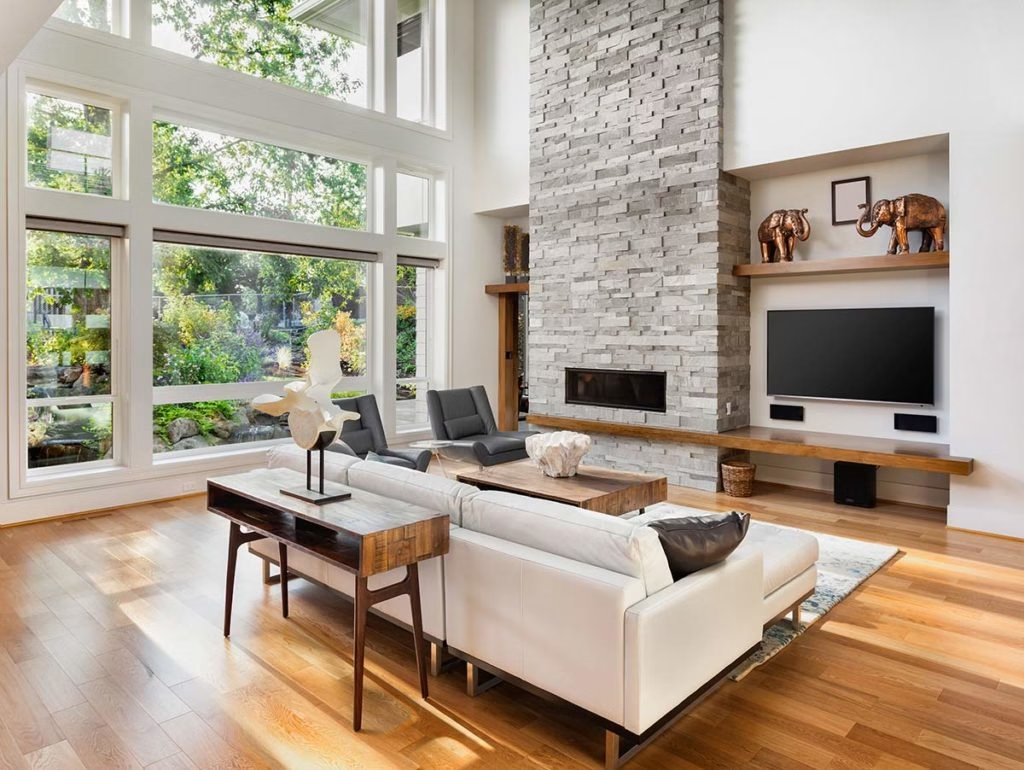
If you have spent any time enjoying the changing seasons in the Treasure Valley, you already know that our high-desert climate is defined by dramatic extremes. We can experience blazing, single-digit humidity during hot summer afternoons and bone-dry, freezing winds throughout the winter months. While this environment is ideal for outdoor recreation along the Boise River Greenbelt or up at Bogus Basin, it presents a distinct set of physical rules for interior design and home renovation projects.
Wood is a “hygroscopic” material, meaning it acts like a sponge. It absorbs moisture when the air is humid and releases it when the air is dry. In cities like Boise, Eagle, and Meridian, our indoor air moisture swings wildly over a twelve-month calendar.
When your furnace kicks on in January, dropping indoor humidity down to desert-like levels, unprotected floorboards will naturally begin to shed moisture. Without proper planning, selection, and execution, this dynamic movement results in what local flooring pros call “The Boise Gap” otherwise known as those unsightly separations between planks that trap dust and break the visual continuity of your home’s living spaces.
Demystifying the Options: Solid vs. Engineered Hardwood for Beginners
When exploring premium flooring options for a luxury remodel or a custom new home build, you will inevitably navigate two primary categories of real wood: solid hardwood and engineered hardwood. While they appear completely indistinguishable from the surface once installed, their internal construction dictates how they interact with Idaho’s dry air.
Traditional Solid Hardwood Flooring
Solid wood planks are exactly what they sound like: a single, continuous piece of timber milled directly from a tree trunk from top to bottom, usually cut to a classic ¾ inch thickness. This is the traditional standard of luxury that has graced historic estates for centuries.
- The Luxury Advantage: Its greatest benefit is its long-term longevity. Because it is a solid piece of timber, it can undergo full hardwood floor refinishing sandings and color changes multiple times over its lifespan. It is an investment meant to last several generations.
- The High-Desert Challenge: Because there is nothing restraining the natural grain of the timber, solid wood is highly reactive to Boise’s dry winters. If the home’s indoor air isn’t stabilized, wider solid planks can easily cup, crown, or develop noticeable gaps as they struggle to find environmental equilibrium.
Engineered Hardwood Flooring
Engineered wood is not laminate or synthetic flooring; it is a high-tech evolution of real wood designed specifically to handle challenging architectural settings. An engineered plank consists of a premium top layer (called a wear layer or veneer) of genuine hardwood bonded under immense pressure to a multi-layered core of high-quality plywood or composite material.
- The Luxury Advantage: The brilliance of this design lies in its cross-ply construction, where each layer of the core runs in a different, alternating direction. When Boise’s dry winter air causes the top hardwood layer to shrink, the cross-ply layers underneath pull back in the opposite direction, neutralizing the wood’s natural movement. This engineered balance delivers unparalleled dimensional stability, making it virtually immune to shrinking, gapping, and cupping.
- The High-Desert Challenge: While incredibly stable, engineered options have a limited number of refinishing cycles. Extremely thin budget options cannot be sanded at all, which is why a luxury home requires a premium thick wear layer that preserves future design flexibility.
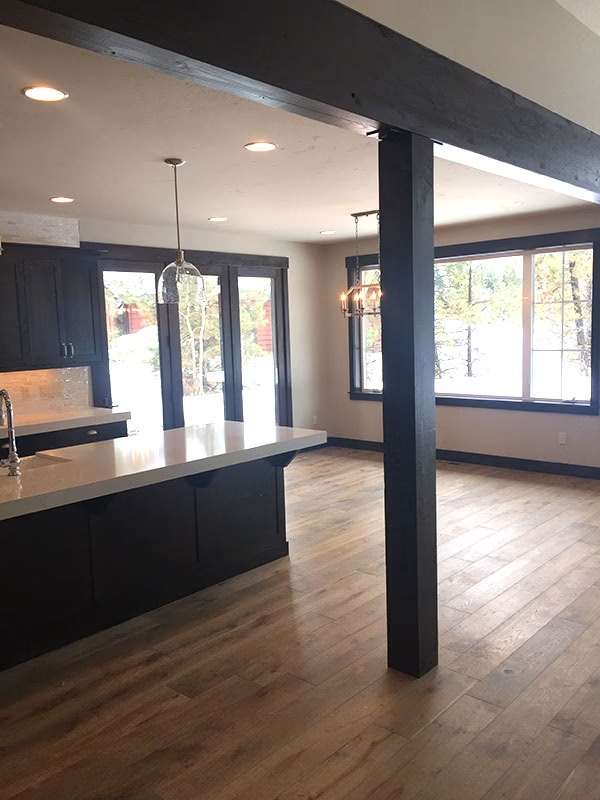
Sawn-Face Veneers: The Elite Compromise
For homeowners who demand the pristine prestige of authentic solid timber but want the worry-free stability of modern engineering, the solution lies in choosing engineered planks featuring a sawn-face veneer.
Many mass-produced engineered floors use a “rotary-peeled” veneer, where log sections are spun against a massive blade, slicing the wood off in sheets. This process distorts the natural grain pattern, making the wood look repeating and unnaturally uniform. A premium sawn-face veneer, however, is sliced straight through the log, exactly like a traditional solid wood plank. This preserves the genuine, raw grain characteristics, depth, and unique markings of the wood.
Once our team completes a flawless installation, a sawn-face engineered floor looks completely identical to a traditional solid floor, allowing you to capture the romance of genuine timber with the peace of mind of advanced engineering.
The Ultimate Decision Framework: Choosing Your Match
To help you decide which material path fits your upcoming home remodel or custom build, review this definitive list of design insights from our master craftsmen:
When to Choose Solid Hardwood
- Historic Restorations: You are updating a classic home in Boise’s North End, or on the Bench, and you want to preserve the site’s historical accuracy.
- Long-Term Multi-Generational Thinking: You view your home as a permanent family compound and want a floor that can be sanded, stained, and completely transformed multiple times across the next 100 years.
- Controlled Indoor Environments: Your home features a modern HVAC setup equipped with an active, well-maintained whole-home humidification system capable of locking-in a steady humidity level year-round.
When to Choose Engineered Hardwood
- Wide Plank Visuals: You love the expansive look of wide planks (7-inch to 10-inch widths) for an open-concept layout in Eagle or Meridian. Wide planks move dramatically when solid, but remain flat when engineered.
- Concrete Slab Installations: Your home is built on a concrete slab foundation or includes a luxury basement living space. Solid wood cannot safely be nailed to concrete, but engineered planks excel here when glued or floated.
- Radiant Heating Systems: You are integrating advanced in-floor radiant heating. The steady upward heat cycle will warp solid wood over time, whereas engineered wood is specifically rated to handle radiant warmth without losing its shape.
The Heritage Secret: Precision Acclimation
Regardless of whether you choose solid or engineered timber for your home, the success of your project hinges on a non-negotiable step: the acclimation process.
Many independent contractors or big-box retail crews rush onto a job site, immediately unloading wood from a truck and nailing it down to meet a tight schedule. In Idaho, we’ve seen this approach many times, and it is a recipe for long-term structural failure!
When Heritage Hardwood manages your project, the raw materials are placed inside the specific rooms where they will live for a minimum of 3 to 5 days before installation begins. We use professional pinless moisture meters to monitor the core moisture content of both your subfloor and the new planks. The timber is only installed once it has successfully reached environmental equilibrium with your home’s unique interior climate, ensuring your investment stays perfectly flat and stable for a lifetime.
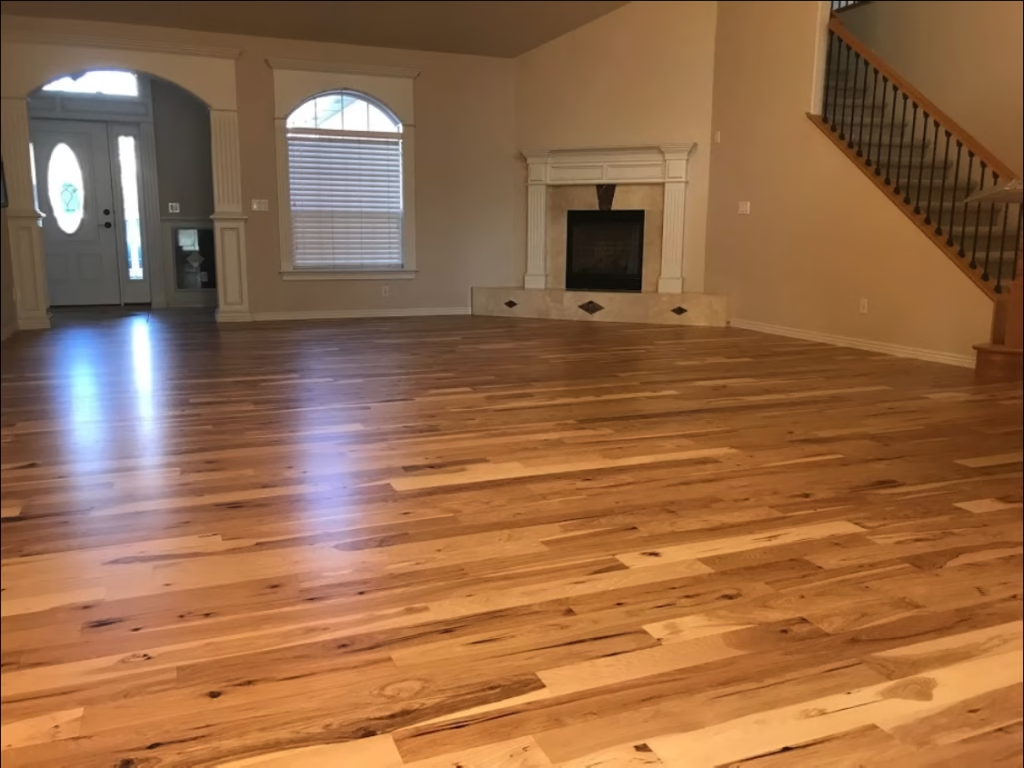
The Do’s and Don’ts of Wood Floors in a Dry Climate
- DO verify that your HVAC system’s humidistat is functioning correctly before the dry winter air arrives in November.
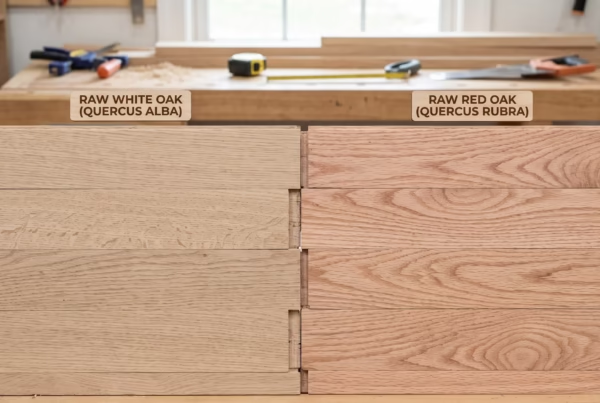
- DO select harder domestic wood species like White Oak or Hickory for high-traffic zones, especially if you live in an active home with pets and kids.
- DON’T use a steam mop under any circumstances. The sudden blast of heat and moisture forces water deep into the pores of dry wood, which will ruin the finish over time.
- DON’T lay area rugs down immediately after installation. Let your new floors get exposed to natural sunlight evenly for the first few months to avoid light shading marks as the wood cures.
Frequently Asked Questions (FAQ)
1. Why are my hardwood floors developing small gaps in the winter?
This is known as seasonal gapping, and it is incredibly common in Boise. As winter heaters run, they strip moisture from indoor spaces, causing real wood to slightly contract. In most cases, these minor gaps naturally close back up as spring rain returns and indoor relative humidity rises.
2. Can engineered wood floors undergo professional hardwood floor refinishing?
Yes, provided you choose a premium product with a thick wear layer (ideally 4mm or greater). While bargain-engineered floors have thin veneers that cannot handle sanding, our luxury collections can easily be sanded and refinished by an expert crew to erase deep scratches or change your stain profile down the road.
3. What happens if my home’s relative humidity drops below 30%?
When indoor air drops below 30% humidity for extended periods, wood risks dry-stress damage. This goes beyond standard gapping and can cause checking (small splits along the grain) or structural wood separation. Running a basic humidifier during dry winter months easily prevents this.
4. How do I choose between different plank widths for a high-desert home?
As a general rule of thumb, wider solid planks fluctuate more noticeably with climate shifts. If you want a solid wood layout, sticking to narrower profiles (2-1/4 to 3-1/2 inches) minimizes visible shifting. If your design vision calls for modern, luxurious wide planks (5 to 9 inches), choosing engineered construction is the safest way to ensure long-term stability.
Long-Term Maintenance for Lifelong Luster
Once your premium wood floor is flawlessly installed, protecting its raw luxury comes down to simple, regular habits. Routine cleaning is your primary line of defense against everyday wear. Dust and fine desert grit act exactly like sandpaper underfoot, slowly wearing down your protective finish in busy hallways and entryways.
For comprehensive strategies on how to safely clean and care for your new investment without clouding the factory finish, read our complete guide to hardwood floor maintenance. Whenever your wood begins to show signs of looking dull after years of heavy family use, you do not need to replace it. A targeted hardwood floor refinishing can completely restore the rich character and original glow of your wood, ensuring your home remains an elegant haven for decades to come.
Ready to select the perfect floor for your upcoming home transformation?
Connect with our local design team today to experience luxury craftsmanship built specifically for the Idaho lifestyle. Click here to request your complementary Heritage Hardwood Consultation and let us show you why craftsmanship is in our heritage.