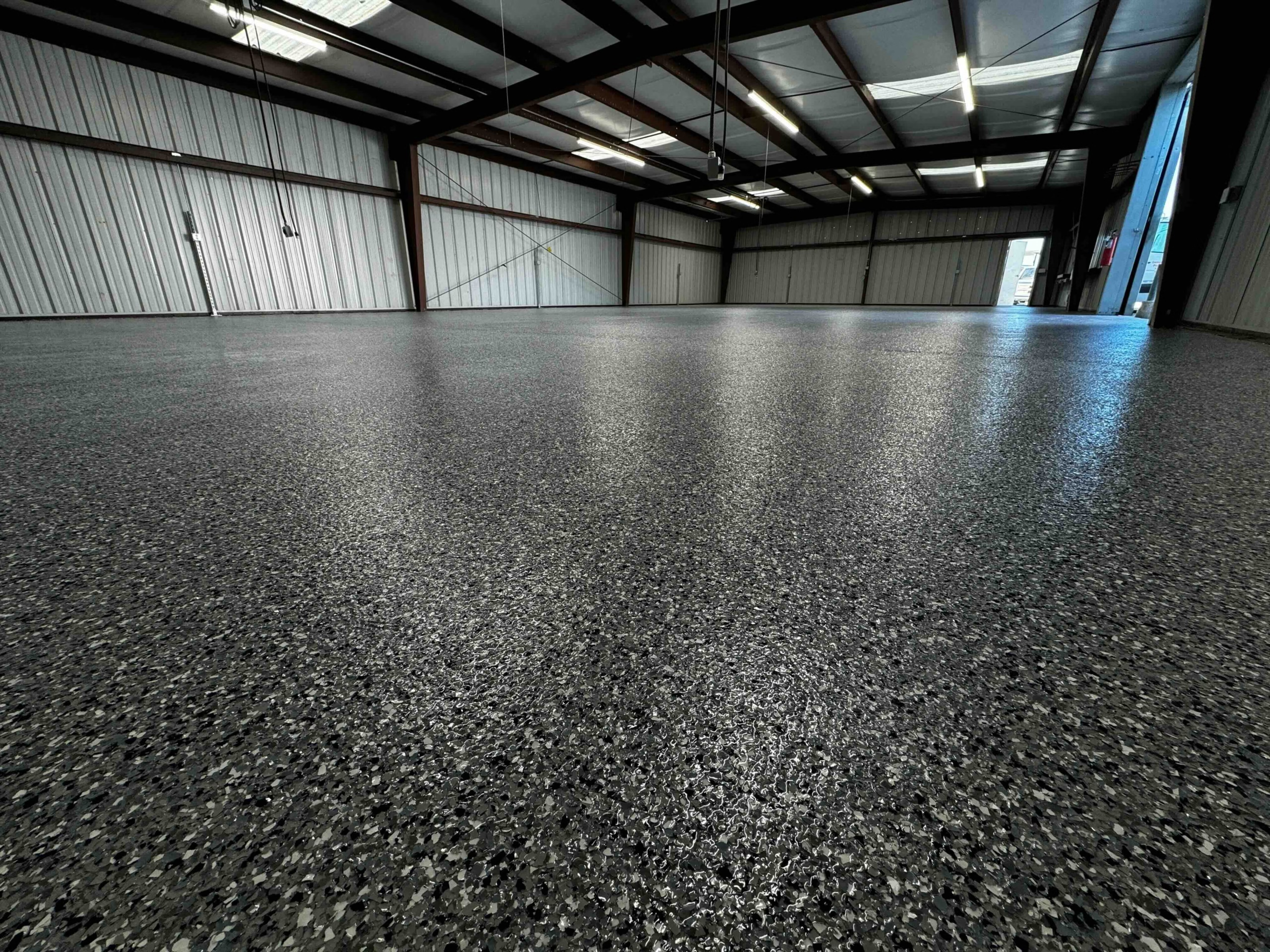
Applying a professional commercial-grade epoxy floor coating before winter is the single most effective way to prevent road salt erosion, freeze-thaw spalling, and chemical pitting on your garage concrete. Unlike thin DIY kits or snap-together tiles that trap corrosive brine underneath, our multi-stage industrial coating process, featuring diamond-grind surface preparation, a moisture-tolerant primer, and high-performance solids epoxy with a polyaspartic clear coat creates an impervious, showroom-grade barrier that turns your garage into a clean, and functional extension of your home.
The Idaho Winter Assault on Bare Concrete Floors
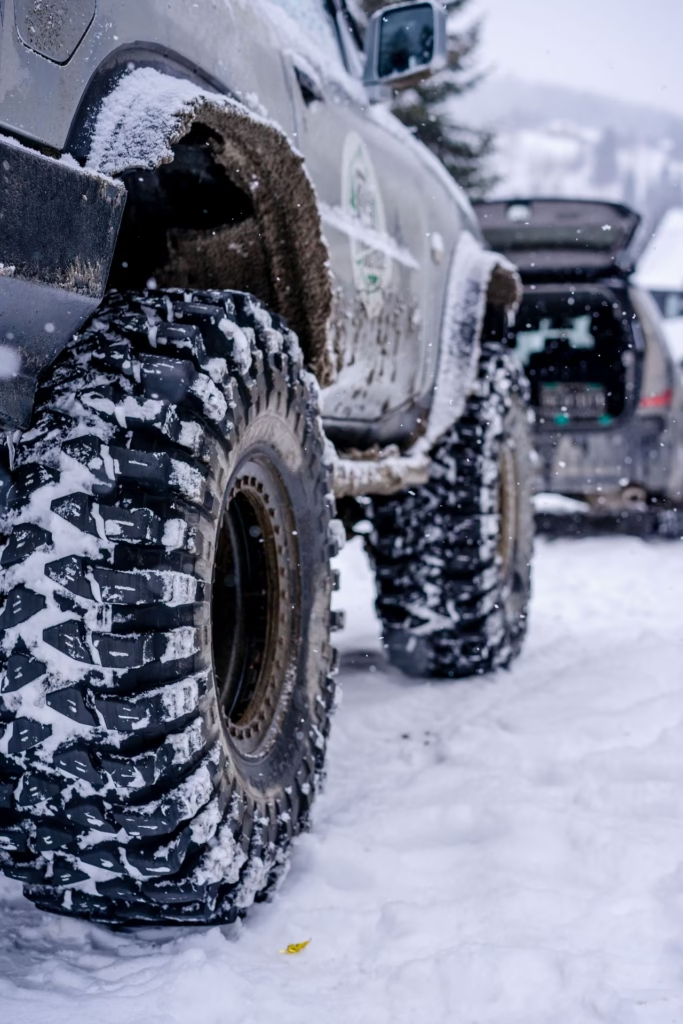
Anyone who has driven Highway 55 up towards McCall, or commuted down I-84 into downtown Boise after a November storm knows what follows your vehicle home. Trucks, SUVs and passenger cars haul back pounds of slush, mag-chloride brine, coarse grit, and corrosive road salts packed tightly into wheel wells and their undercarriages.
Once parked inside your residential garage, that frozen cocktail begins to thaw. Liquid drops onto the porous surface of your untreated concrete floors. In our high-desert climate, winter temperatures swing wildly across the freezing mark, often dropping into the teens at night after melting during the afternoon. See what happens:
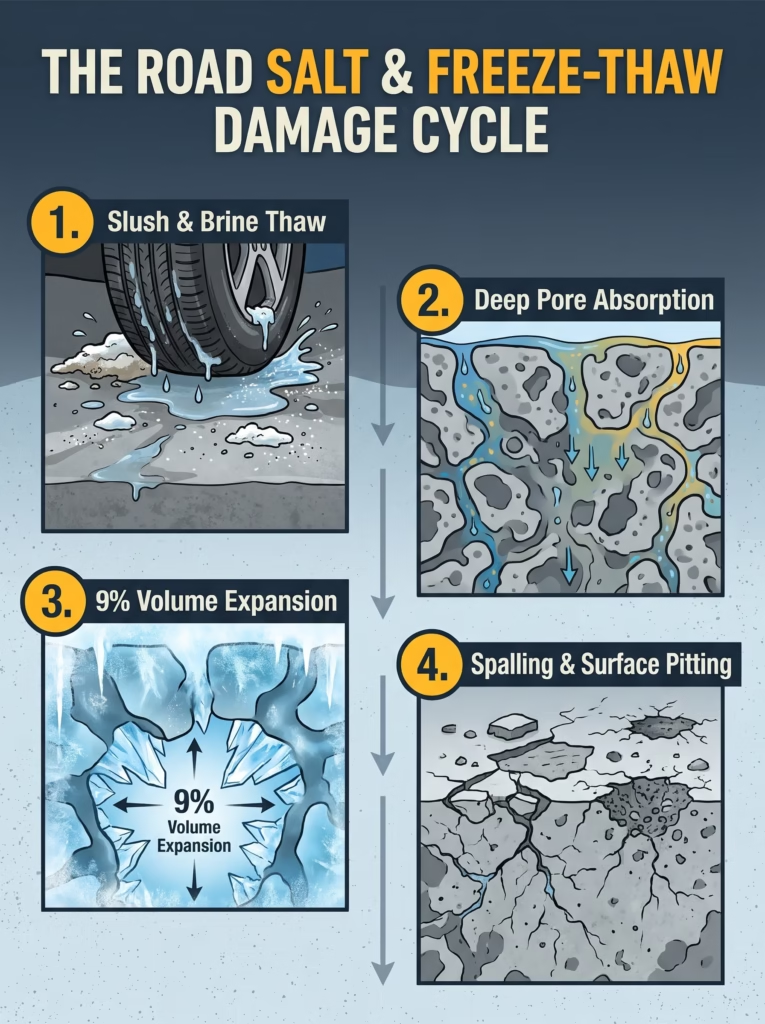
1. Slush & Chemical Influx: Vehicles track in snow, road brine, and magnesium chloride commonly used on Idaho roads. Inside a semi-tempered garage, this melting slush forms a corrosive chemical pool on unsealed concrete.
2. Capillary Action: Untreated concrete acts like a rigid sponge. Capillary suction draws the dissolved salt solution deep beneath the surface paste into open micro-pores in your concrete.
3. Cryogenic Expansion: As overnight garage temperatures drop below freezing, trapped liquid turns to ice, expanding by roughly 9% in volume and generating extreme internal hydraulic pressure.
4. Cracking & Flaking Surface (Concrete Spalling): As the ice expands and salt crystals grow inside the slab, the pressure breaks apart the top layer of concrete, leaving behind ugly cracks, holes, and surface flaking.
In short, bare concrete in your garage acts like a dense sponge. When salt-saturated brine enters concrete capillaries and freezes, expanding ice exerts immense hydraulic pressure. Over just a few seasons, this freeze-thaw cycle triggers irreversible surface spalling, crumbling, and deep pitting, turning a smooth slab into an unsightly, dusty floor.
Why DIY Kits and Floor Coverings Fail in the Treasure Valley
When looking to protect their space or get ready for winter, many homeowners explore temporary fixes or big-box paint kits. Unfortunately, these solutions fail to stand up to heavy daily driving and severe seasonal extremes:
| GARAGE FLOOR PROTECTION COMPARISON | |||
|---|---|---|---|
| System Type | Prep Method | Chemical / Salt Resistance | Hot Tire Pickup Risk |
| Hardware Store Paint (Water Based) | Acid Etching (Inconsistent) | Very Poor (Softens quickly) | Extremely High (Peels easily) |
| Interlocking Tiles (Garage Floor Tiles) | Loose Laid (No Bond) | Poor (Traps brine below) | Low (Moves / Noisy) |
| Roll-Out Vinyl Garage Floor Mats | Unbonded Mat | Moderate (Condensation rot) | Moderate (Stains / Curls) |
| Heritage Commercial Multi-Coat System | Diamond Grinding (CSP 2-3 Profile) | Maximum (Impervious seal) | Zero (Permanent bond) |
The “Hot Tire Pickup” Nightmare of Water Based Paints
Store-bought hardware paint kits rely on diluted, water based formulas that contain minimal resin solids. More critically, their included DIY citric acid etch cannot properly open the mechanical pores of hard-troweled concrete.
When you pull your warm tires onto these thin coatings, the vulcanized rubber cools and contracts, gripping the paint. When you back out the next morning, the paint peels straight off the concrete in tire-sized patches. This failure (known in the flooring trade as hot tire pickup) leaves bare spots that immediately absorb road salts.
The Problem with Interlocking Tiles and Vinyl Mats
Modular garage floor tiles and heavy roll-out garage floor mats look appealing at first glance, but they do not form an airtight, liquid-proof bond with your existing concrete. Snowmelt laden with salt drips through tile seams and settles underneath rubber mats. Trapped in an unventilated environment, that salt-brine stew stagnates against the slab, accelerating subsurface spalling, efflorescence, and mildew growth where you cannot see it.
The Heritage Standard: Diamond Grinding and 100% Solids Chemistry
At Heritage Hardwood Flooring, we apply the same multi-generational craftsmanship to concrete coatings as we do to our luxury architectural hardwood flooring installations. A high-end garage should function as a seamless extension of your home, whether storing ski gear, parking mountain bikes, or housing an active garage workshop.
Our professional epoxy coatings achieve an unbreakable mechanical bond through a proven industrial process:
| THE HERITAGE PROFESSIONAL COATING WORKFLOW | |||
|---|---|---|---|
| 1. DIAMOND GRIND | 2. CRACK REPAIR | 3. BASE & CHIPS | 4. POLYASPARTIC |
| Heavy planetary diamond grinding opens concrete pores (CSP-2) | Moisture-cure hybrid epoxy mends joint fractures | Deep-wicking 100% solids base + vinyl flake broadcast | Non-yellowing polyaspartic topcoat seals everything in |
1. Mechanical Surface Preparation
True adhesion is impossible without correct surface preparation. We never use dangerous, unreliable acid washes. Our crew uses industrial planetary diamond grinders connected to HEPA dust extractors to shave off surface laitance, old sealers, and oils. This creates a concrete surface profile (CSP 2 to 3), giving the slab a texture like 80-grit sandpaper so the base coat can fuse seamlessly into the stone matrix.
2. Moisture Barrier & 100% Solids Epoxy Primer
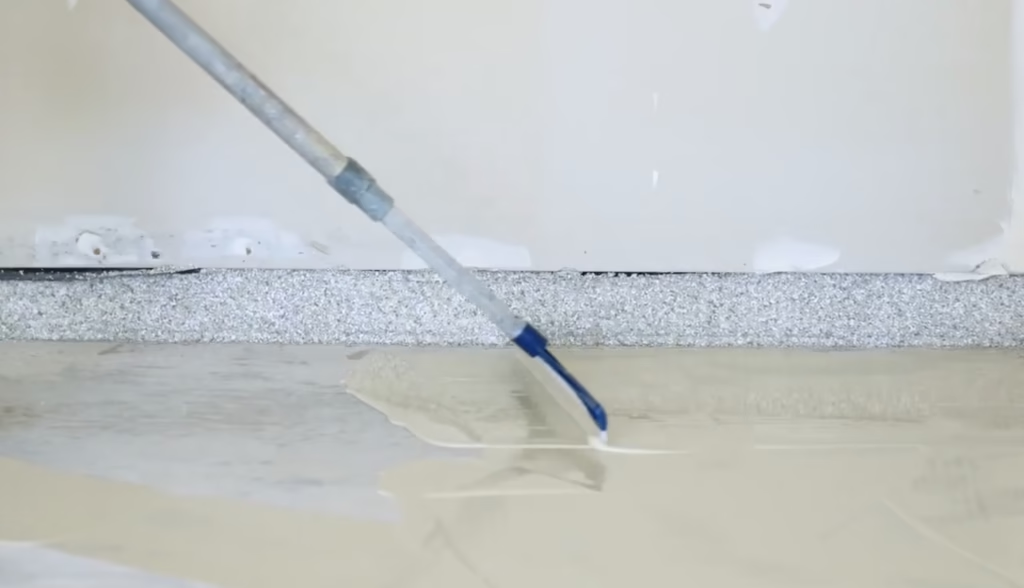
Next, we treat all joint fractures and cracks with high-modulus epoxy menders before applying our heavy-duty base coat. We use an industrial-grade 100 solids resin formulation rather than solvent-thinned materials. Because 100% solid epoxy contains zero water or evaporating solvents, 100% of the wet material applied cures into a dense, impact-resistant structural layer that will never shrink, bubble, or peel under hot tires.
3. Full-Broadcast Vinyl Flake Matrix
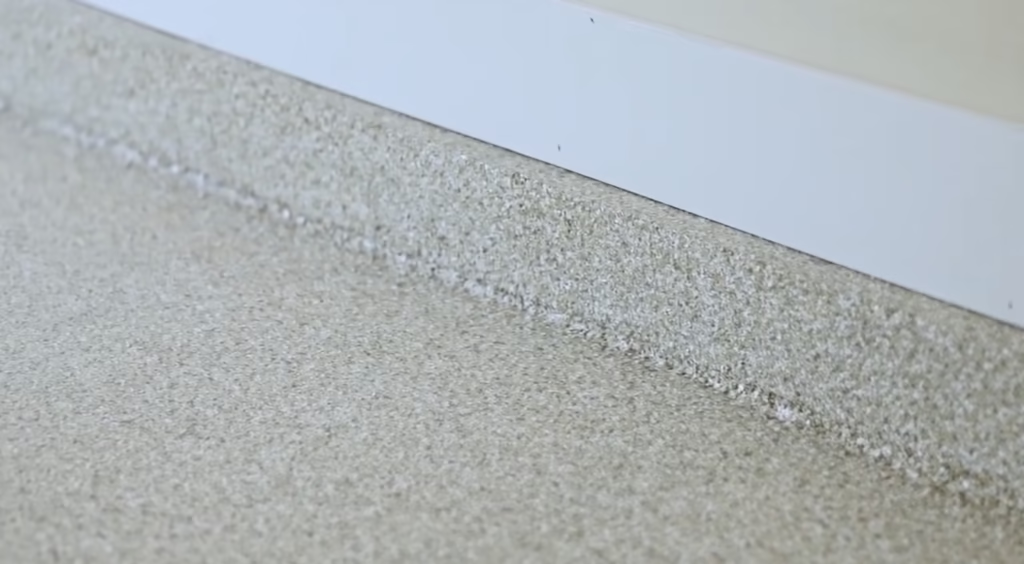
While the base coat is wet, we broadcast a dense, custom-blended vinyl flake matrix across the entire floor to complete refusal. This full-coverage flake layer delivers multi-tonal elegance, hides natural concrete imperfections, and provides crucial slip resistance when stepping in from rain or snow.
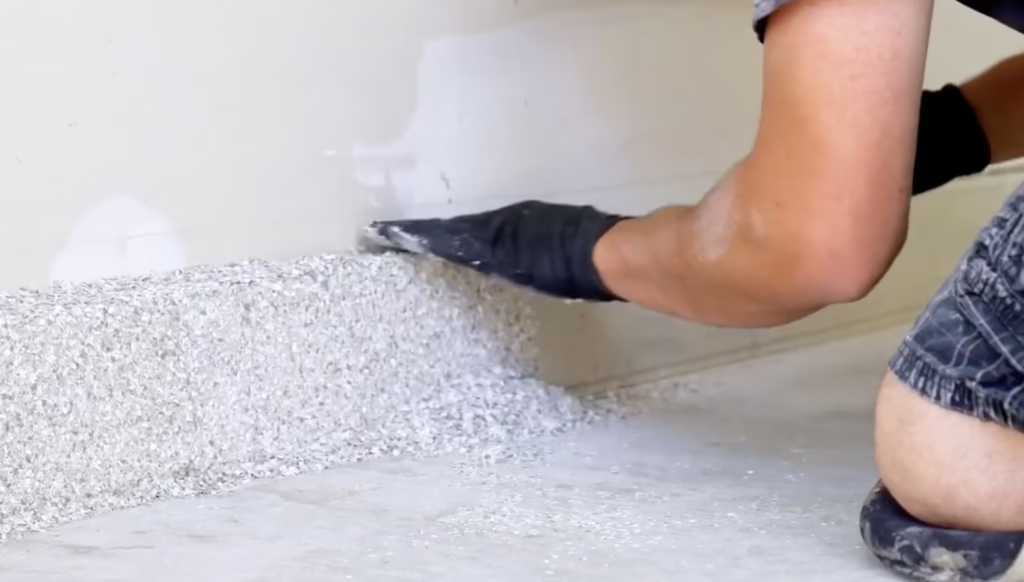
4. Polyaspartic Clear Topcoat
We finish with an aliphatic polyaspartic clear shield. Polyaspartic resin cures four times harder than standard epoxy, resists chemical exposure (gasoline, brake fluid, battery acid, and de-icing road salts), and is 100% UV-stable, meaning sunlight entering through open garage doors will never turn your floor yellow.
Expanding Your Living Space: The Modern Idaho Garage
In communities across Eagle, Star, and Meridian, modern garages are no longer dark utility sheds. They are high-functioning hubs for mountain gear, sports equipment, home gyms, and detailed automotive work.
A high-build, durable epoxy floor coating transforms a cold, stained workspace into an easy-to-clean living area. Because the topcoat creates an impenetrable surface, winter road grime, slush, and oil drips wipe clean in seconds using a mild, pH-neutral cleaner and a rubber squeegee. No dust tracks into your home, and your mudroom stays cleaner all season long.
Complete Home Continuity: Combine Garage & Hardwood Transformations
Many Treasure Valley homeowners tackle interior and exterior transitions together. Coordinating your garage upgrade with interior renovations creates architectural continuity from the driveway to your living room.
| SEAMLESS RESIDENTIAL UPGRADE WORKFLOW | |
|---|---|
| Exterior / Garage | Commercial-grade flake epoxy system to stop salt, moisture, and dirt at the outer entryway. |
| Interior Living Areas | Precision hardwood floor installation with White Oak, Walnut, or dense pet-friendly Hickory. |
| Existing Wood Spaces | 99% dustless hardwood floor refinishing to revive aged hardwood floors, without harsh fumes or excessive airborne dust. |
When you combine the garage epoxy floor coating with hardwood flooring services, our team synchronizes your project schedules to minimize household disruption. While your garage concrete undergoes diamond profiling and coating, our interior craftsmen can manage site-acclimated timber installations or 99% dustless floor sandings, giving your entire home a fresh, cohesive foundation before holiday gatherings begin.
Do’s and Don’ts for Winter Garage Floor Care
- DO clear away standing slush and snow melt puddles with a rubber floor squeegee to prevent road grit from being ground into the surface.
- DO hose down your coated floor periodically in the winter to wash away dried de-icing chemicals and magnesium chloride residues.
- DON’T use metal snow shovels or sharp steel scrapers directly on your coated floor; opt for heavy-duty plastic-edged shovels instead.
- DON’T rely on temporary carpet runners or unbonded rubber mats in wet zones, which trap dirty moisture and encourage mildew growth beneath.
Frequently Asked Questions (FAQ)
1. How long does the garage floor coating installation process take?
Thanks to our advanced polyaspartic chemistry, our quick installation process is typically completed in just 1 to 2 days. You can walk on the floor in socks within 6 to 8 hours of topcoat application, and return heavy trucks, toolboxes, and SUVs to the garage in just 24 to 48 hours.
2. Can an epoxy floor coating be applied during cold Boise winter months?
Yes, provided the concrete slab is kept within our application temperature tolerances. We utilize specialized winter-formulated polyaspartic coatings that cure reliably in temperatures down to 20°F, allowing us to install durable, high-adhesion systems well into late autumn and early winter.
3. What is the difference between standard paint and a commercial epoxy garage floor coating?
Hardware store concrete paints are thin, water-thinned acrylics that dry through simple evaporation, leaving behind a brittle film that peels easily under tire heat. Commercial garage floor coating systems utilize two-component, thermo-setting resins that cross-link chemically with the opened concrete pores, forming an impenetrable, shock-resistant composite layer that will not peel or flake.
4. How do I maintain and clean my new coated garage floor?
Caring for a polyaspartic-shielded surface is straightforward: regular dust mopping or sweeping removes loose dirt and trail grit. For deeper cleaning, rinse the surface with warm water and a few drops of mild dish soap or a neutral cleaner, then push the water toward the garage door with a foam squeegee. To learn about protecting natural wood surfaces inside your home, see our guide on hardwood floor maintenance.
Upgrade Your Garage Foundation with Heritage Craftsmanship
Your garage is the true front door to your Idaho home. Before freezing temperatures arrive and the first snowfall blankets the Treasure Valley, protect your concrete from costly salt spalling and ugly chemical staining.
Heritage Hardwood Flooring brings uncompromising quality, licensed crews, and transparent pricing to every project; from showroom-ready garage coatings to heirloom-quality natural wood flooring.
Ready to winterize your garage with an industrial-grade concrete transformation? Contact Daniel Wallis and the Heritage Hardwood team today.