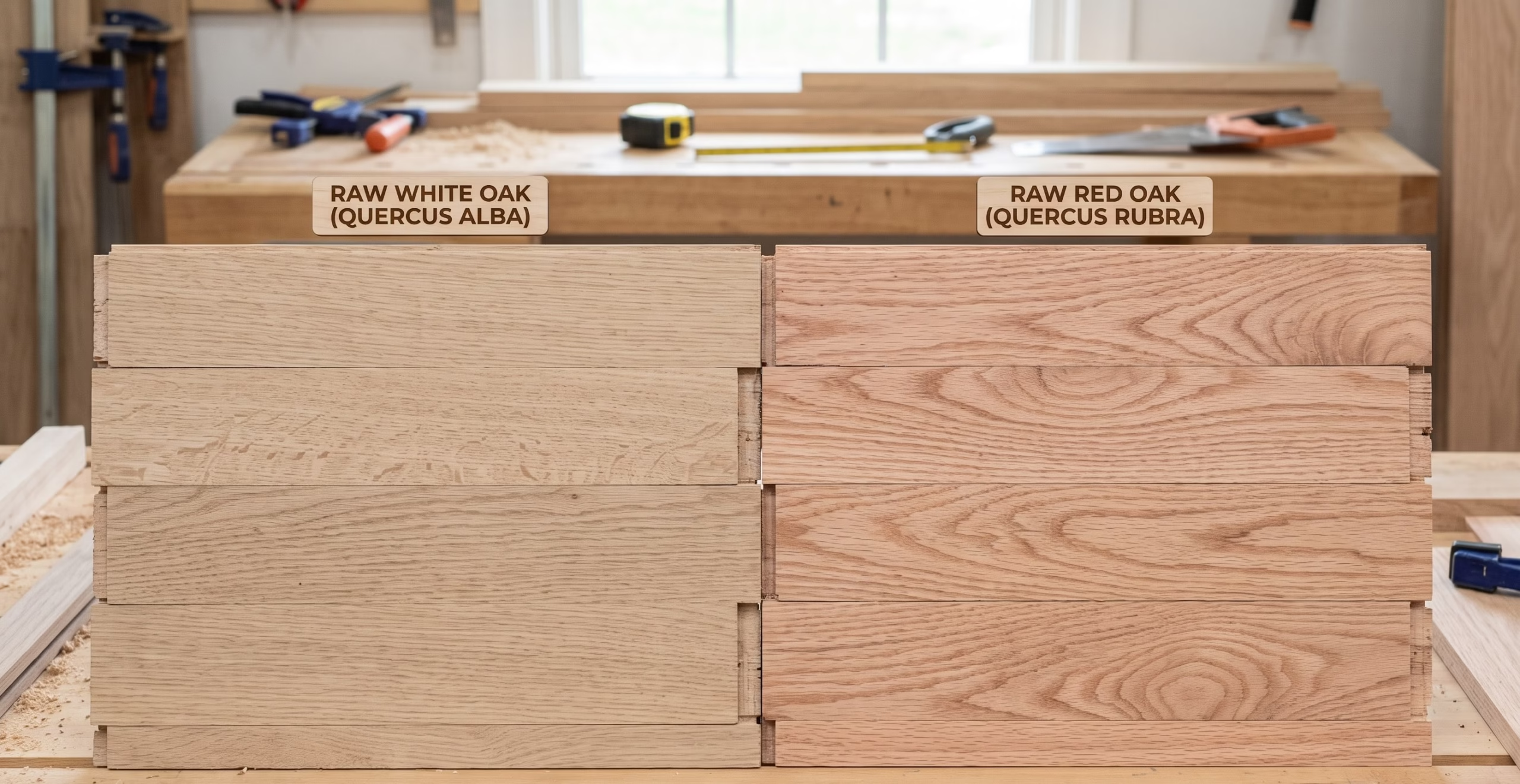
When choosing between White Oak and Red Oak for a Treasure Valley home remodel, White Oak is the superior choice for contemporary aesthetics, cool-toned stains, and moisture-prone areas due to its closed cellular structure and higher Janka hardness rating (1,360 lbf). Red Oak (1,290 lbf) remains the ideal choice for traditional, warm-toned interiors, historic Boise North End restorations, and projects requiring prominent, classic grain patterns that absorb rich stains evenly.
The Enduring Legacy of Oak in the Treasure Valley
Oak has long served as the gold standard of American residential architecture. Whether walking through a 1920s historic craftsman home along Harrison Boulevard in the Boise North End or stepping into a modern luxury build in Eagle or Meridian, oak flooring provides an irreplaceable foundation of strength, warmth, and longevity.
However, when planning a home improvement project or selecting materials for a new home build, homeowners are almost immediately presented with a foundational decision: White Oak, Red Oak, or something else?
While both domestic hardwoods share the same botanical family, their cellular composition, grain density, water resistance, and reaction to modern stains differ substantially. Understanding these technical nuances ensures your investment matches your home’s architectural style and the daily demands of active Idaho living.
Botanical and Structural Differences
The distinction between White Oak (Quercus alba) and Red Oak (Quercus rubra) extends far beyond surface color. In fact, raw White Oak is often darker (displaying olive, tan, and taupe tones) than raw Red Oak (which displays pinkish-wheat undertones). The fundamental difference lies within the wood’s microscopic vascular anatomy.
| Feature | White Oak | Red Oak |
|---|---|---|
| Cellular Structure | Pores blocked by tyloses | Open, hollow capillary tubes |
| Water Resistance | High (water-resistant, dense fiber) | Moderate (porous, rapid moisture absorption) |
| Janka Hardness | 1,360 lbf | 1,290 lbf |
White Oak growth rings feature cellular outgrowths known as tyloses. These microscopic dams fully seal the wood’s vascular pores, preventing water and moisture vapor from traveling through the timber cells. This structural trait is why shipbuilders historically utilized White Oak for wooden vessels and why it remains the premier choice for modern kitchens, dining areas, and active living spaces.
Red Oak lacks tyloses. Its cellular pores remain open, hollow capillary tubes. If a piece of raw Red Oak is placed in liquid, water draws upward through the grain rapidly. In residential settings, this means unsealed Red Oak is more vulnerable to liquid spills and seasonal moisture swings if topcoats are neglected.
Janka Hardness and Everyday Durability
Idaho homeowners frequently ask how oak species hold up against large pets, mountain bikes, and dirt tracked in from the Boise Foothills and Boise River Greenbelt trails.
The Janka Hardness Scale measures the force required to embed a 0.444-inch (11.28 mm) steel sphere halfway into a wood plank:
- White Oak: 1,360 pounds-force (lbf)
- Red Oak: 1,290 pounds-force (lbf)
While White Oak provides slightly higher dent resistance under heavy furniture and dog claws, Red Oak possesses a more pronounced, open grain pattern. This prominent visual grain acts as natural camouflage, hiding minor micro-scratches, dust, and daily wear more effectively than smoother wood surfaces.
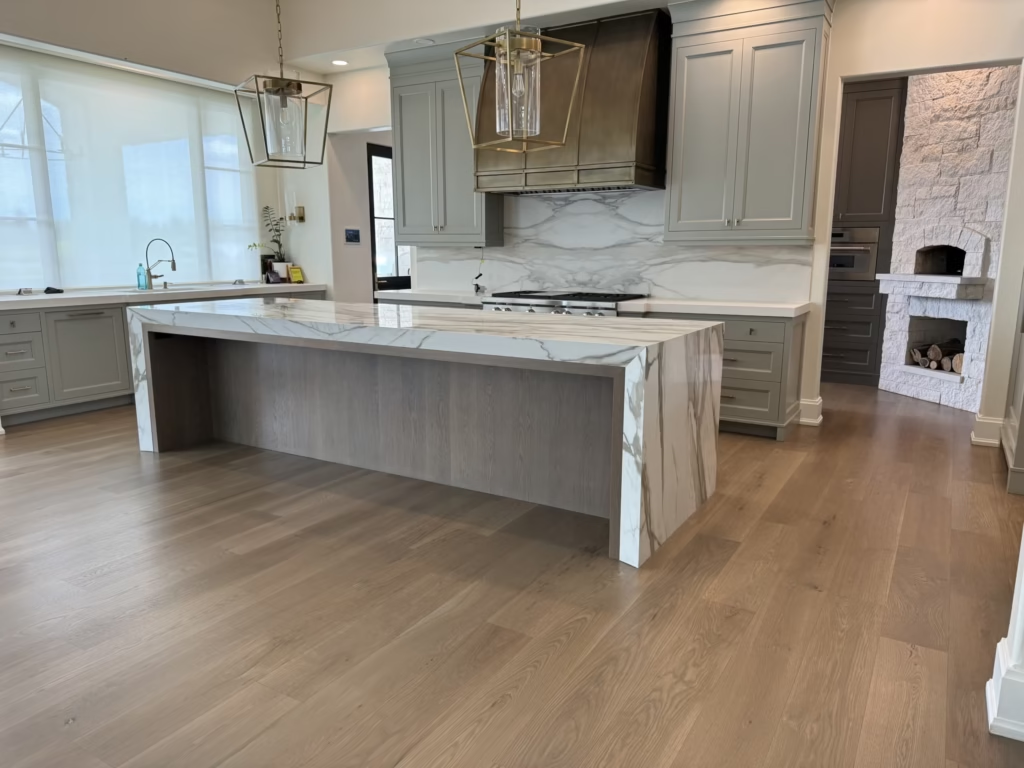
Aesthetic Comparisons: Grain, Tone, and Stain Absorption
| Trait | White Oak | Red Oak |
|---|---|---|
| Natural Tone | Cool tan, muted taupe, gray/olive | Warm amber, golden wheat, pinkish |
| Grain Appearance | Linear, straight, tight ray flecks | Flared, open, prominent cathedrals |
| Best Stain Styles | Nordic blonde, natural raw, gray | Rich walnuts, chestnuts, dark espresso |
| Water Resistance | High (closed cellular pores) | Moderate (open cellular pores) |
Modern Neutral and Scandinavian Aesthetics
For homeowners seeking the popular “Nordic raw,” ultra-matte, or light gray-washed finishes prominent in modern Eagle estates, White Oak is the clear industry favorite. Its neutral, cool undertones allow light-toned stains and clear waterborne finishes to maintain an authentic, organic look without turning yellowish or orange over time.
Traditional Warmth and Classic Depth
If your project involves preserving a historic bungalow or matching existing millwork, Red Oak delivers unmatched warmth. Because its open cellular pores absorb pigments deeply, Red Oak takes dark walnut, golden oak, and rich espresso stains with remarkable uniformity, producing classic, warm “cathedral” grain arches across the floor.
Acclimatization in Idaho’s Arid Climate
Regardless of which oak species you select for your real wood flooring installation, the dry, high-desert atmosphere of the Treasure Valley requires strict material preparation.
In winter, indoor relative humidity levels across Southwest Idaho can drop below 20% when residential heating systems run continuously. If hardwood is installed without a mandatory 3-to-5-day site acclimatization period, the planks will contract as they shed moisture, creating noticeable seasonal gaps between boards.
Our family-owned, local crew delivers materials directly into the living space where they will permanently reside, verifying moisture content across both the subfloor and the hardwood planks with precision digital meters before the first board is fastened.
Solid vs. Engineered Oak: Selecting the Right Format
Both White and Red Oak are available in solid hardwood planks and high-performance engineered profiles:
- Site-Finished Solid Oak: Traditional 3/4-inch solid planks are installed raw, then sanded, custom-stained, and sealed on-site. This provides a smooth floor surface that can undergo hardwood floor refinishing in Boise multiple times over a century.
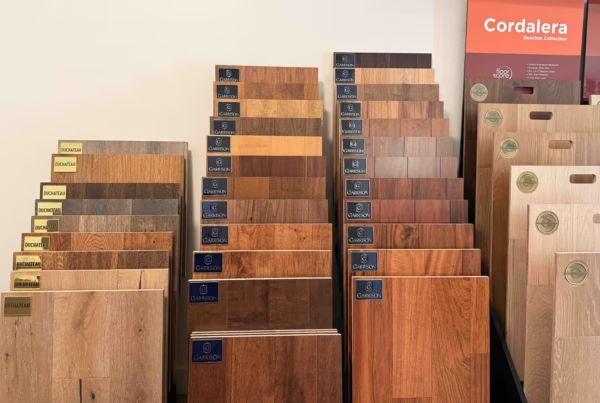
- Engineered Oak: A genuine hardwood top layer permanently bonded to a multi-ply cross-grain core. This configuration provides maximum dimensional stability over concrete slab subfloors, radiant heating systems, and multi-level floor plans. When selecting engineered oak, insist on a thick wear layer (4mm to 6mm) from trusted manufacturers like Sheoga, Garrison, Hallmark, or DuChateau.
Maintaining and Preserving Oak Floors
Protecting your oak flooring investment from everyday grit requires simple, consistent habits:
- Avoid Steam Cleaners: Never use steam mops on hardwood; pressurized steam forces moisture deep into grain boundaries, clouding the finish.
- Use Fine Bristles and Bare-Floor Vacuums: Sweep regularly or vacuum using dedicated hard-floor attachments to eliminate abrasive dust before it scratches the topcoat. Read our full hardwood flooring cleaning and maintenance guide for more details.
- Periodic Maintenance Coats: Applying a clean hardwood floor maintenance coating every 3 to 5 years re-establishes the protective surface without requiring a full sand-and-refinish.
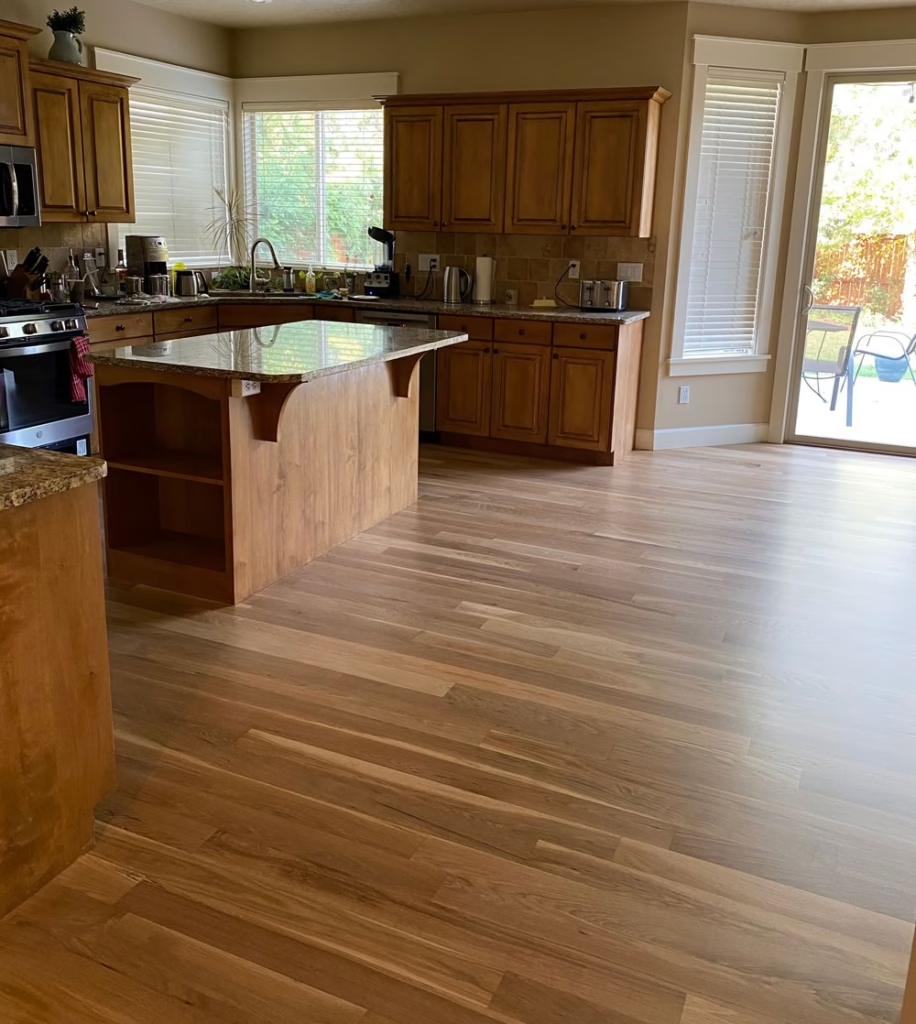
At Heritage Hardwood Flooring, our owner-operated team manages every project personally. We work directly with you to match the right species, width, and finish system to your family’s lifestyle, with no commissioned salespeople and no third-party sub-contractors.
Frequently Asked Questions
Q: How can you tell the difference between raw White Oak and Red Oak?
A: Raw Red Oak typically displays subtle pinkish or reddish undertones with open, porous end-grain, while White Oak displays cooler, brownish-tan undertones. A professional chemical test or end-grain inspection using a 10x loupe reveals closed cellular pores (tyloses) in White Oak and open capillary holes in Red Oak.
Q: Which oak species is better for homes with dogs?
A: White Oak is slightly harder (1,360 lbf on the Janka scale), providing greater resistance to heavy pressure dents. However, Red Oak’s open, prominent grain pattern is better at visually disguising minor surface scratches from pet claws.
Q: Can Red Oak be bleached or stained to look like White Oak?
A: While two-part chemical bleaching systems and green-neutralizing base stains can reduce Red Oak’s natural pink undertones, achieving a true cool-toned Scandinavian blonde is far more predictable and durable on natural White Oak.
Q: What is the average price difference between White Oak and Red Oak materials?
A: White Oak lumber typically commands a 15% to 30% price premium over Red Oak due to high global demand in modern interior design and architectural millwork.
Whether you are designing a new construction build from the ground up or upgrading existing spaces, our family-owned team handles every detail with honesty, reliability, and master craftsmanship.
Ready to explore full-scale samples of our luxury hardwood collections? Contact Daniel Wallis and the Heritage Hardwood team today to schedule your private design consultation.